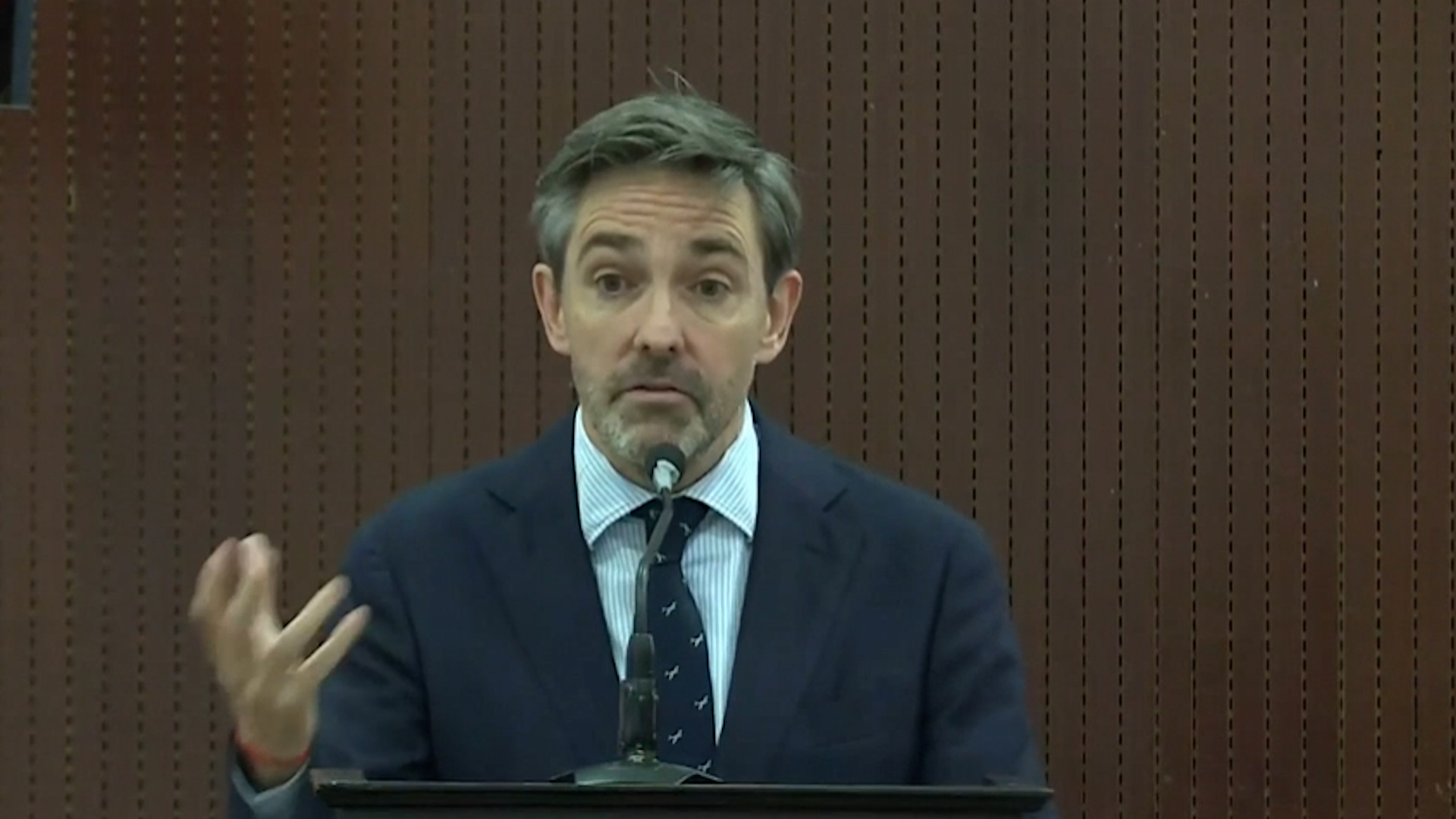
Marc-André Franche comments at the launch of the Civil Society Shadow Report submitted for the FATF Mutual Evaluation of Sri Lanka
The Civil Society Shadow Report submitted by civil society for the Financial Action Task Force (FATF) Mutual Evaluation of Sri Lanka was launched today.
Speaking at the event, UN Resident Coordinator in Sri Lanka Marc-André Franche highlighted the importance of protecting civic space while implementing measures to prevent money laundering and combat terrorist financing in Sri Lanka.
He pointed out that civil society organizations are not only opposing parties to the government, but also serve as partners, watchdogs, and a bridge between institutions and communities.
Commenting on FATF Recommendation 8, Franche said that in the past, some countries had imposed broad restrictions on the entire non-profit sector as part of measures to combat terrorist financing.
He pointed out that such measures also affected legitimate charities and civil society activities.
Following the revision of FATF Recommendation 8 in 2023, greater emphasis has been placed on identifying non-profit organizations that actually face risks and taking appropriate measures against them, he said.
Franche stressed that measures taken to ensure security should be targeted, proportionate and evidence-based.
He also noted that civic space is important for a country’s development, peace, security and human rights.
He said civil society plays an important role in allowing people to express their views, organize within communities and build links between institutions and the public.
Franche also said attention should be paid to the broad interpretation and application of security-related laws in Sri Lanka.
According to his remarks, concerns have previously been raised regarding the use of the Prevention of Terrorism Act (PTA) in relation to civil society organizations, journalists and minority groups.
He further noted that civil society organizations, journalists and human rights defenders have reported concerns relating to surveillance, intimidation and disproportionate scrutiny.
Meanwhile, Franche pointed out that legal amendments had been introduced in 2026 relating to terrorist financing, money laundering and financial transaction reporting, expanding powers relating to investigations, surveillance, freezing of assets and asset management.
He also said that attention should be paid to civic space in relation to proposed new laws concerning organized crime and the registration and supervision of NGOs.
He stressed that such laws should include safeguards against arbitrary detention, disproportionate surveillance, unjustified seizure of assets and unnecessary restrictions on legitimate civil society activities.
Franche further said that it is important for the Government, Parliament, financial institutions and regulatory bodies to maintain broad and meaningful consultations with civil society when developing legislation.
He also said that proposed legislation should be published in local languages and that sufficient time should be provided for public review and submissions.
He pointed out that laws relating to civil society organizations should not impose unnecessary restrictions on their legitimate activities, while safeguards should ensure humanitarian and disaster-response activities, access to banking services, and opportunities for independent review and remedy.
Franche also said that the United Nations stands ready to support Sri Lanka in adopting an evidence-based and proportionate approach while protecting civic space.