Institute of Policy Studies shares policy recommendations to improve access to essential medicines across the Asia-Pacific region.
Colombo | June 2026
The Institute of Policy Studies of Sri Lanka (IPS) has contributed to a regional policy dialogue aimed at improving equitable access to essential medical products across the Asia-Pacific region, highlighting Sri Lanka’s recent healthcare challenges and policy priorities.
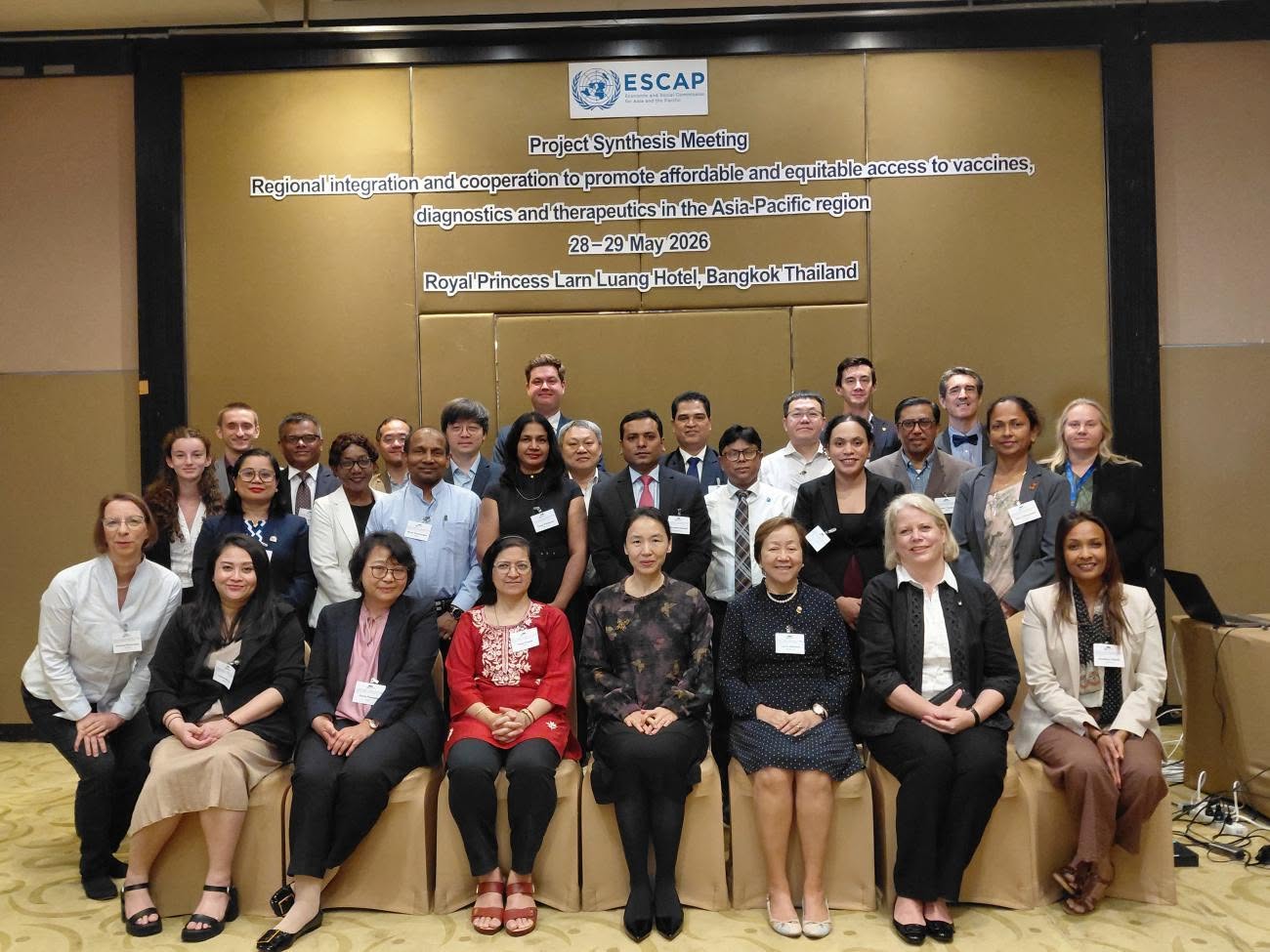
Representing Sri Lanka, Dr. Asanka Wijesinghe, Research Fellow at IPS, presented the country’s experience during the project synthesis meeting organized by the United Nations Economic and Social Commission for Asia and the Pacific (ESCAP) under its initiative on “Regional Integration and Cooperation to Promote Affordable and Equitable Access to Vaccines, Diagnostics and Therapeutics in the Asia-Pacific Region.”
The meeting, held on 28–29 May 2026, brought together policymakers, researchers, and regional partners to review lessons learned from recent global health crises and explore policy measures to strengthen health system resilience and improve access to essential medical products.
During his presentation, Dr. Wijesinghe noted that Sri Lanka’s health sector has faced significant challenges in maintaining pharmaceutical supplies due to the combined effects of the COVID-19 pandemic, the country’s economic crisis, and increasing global protectionist policies.
He observed that international trade restrictions and vaccine nationalism had affected the availability of affordable medicines and medical supplies, emphasizing the importance of predictable trade policies and lower tariffs on pharmaceutical raw materials to improve supply chain stability.
Dr. Wijesinghe also highlighted the economic implications of prioritizing self-sufficiency over comparative advantage, noting that higher production costs can increase medicine prices and reduce the government’s purchasing capacity within a limited healthcare budget. He stressed the value of strengthening regional value chains, particularly in pharmaceutical manufacturing and medical accessories.
Participants at the meeting discussed a range of policy priorities, including reducing trade barriers, reforming tariff structures, improving procurement systems, enhancing regulatory efficiency, and strengthening regional cooperation. These measures were identified as key steps toward ensuring more affordable and equitable access to essential medical products while improving preparedness for future public health emergencies.
The discussions underscored the importance of regional collaboration and coordinated policy action in building resilient healthcare systems capable of responding to future challenges.
Source: Institute of Policy Studies of Sri Lanka (IPS).